
What if giving wasn’t a sacrifice, but a strategy? This year’s International Women’s Day theme ‘Give To Gain’ is built on that idea. When we give time, opportunity, knowledge or visibility to others, we gain in return.
For RGF Staffing, that idea is not a slogan. It shines through in Najat Ben Aalam, Director of People & Governance in the Netherlands whose journey reflects how gratitude, resilience, and a belief in lifting others through mentorship have shaped her path, and how she now uses those same forces to empower others. You’ll find it in sales manager Joan Trivella in the USA, who fills handbags with toiletries and delivers them to women’s shelters, inspiring her colleagues to do the same. And it’s embodied by CEO Koji Sakamoto in Japan, who quietly rewrites the persistent unwritten rules that have long kept talented women out of leadership.
Three people. Three countries. Three expressions of the same conviction: fairness, opportunities and belonging are not HR checkboxes, but a daily practice within RGF Staffing’s operating companies across the world.

RGF Staffing aims to emphasize on fair chances for all people, not just women, explains Chief Sustainability Officer Yvonne Mastenbroek: “We create opportunities for all by bringing people and work together, with a strong focus on inclusion and learning and development. The theme ‘Give To Gain’ is a key focus within our sustainability strategy and our social program RGF Connect. It is broader than gender equality alone. It encompasses age, background, disability and much more. But on International Women’s Day, we pause to shine a particular light on the women – and the allies – within RGF Staffing who are choosing to give. And gaining, every day, as a result. For that reason, I am also proud our operating company RGF Staffing ANZ, once again, has been re-endorsed by WORK180 as a top employer for women in Australia.”

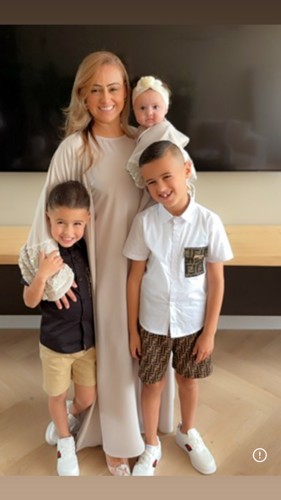
Najat Ben Aalam is the granddaughter of the first guest workers to arrive in the Netherlands from Morocco in the 1960s. As the first in her family to graduate from a pre-university secondary school (gymnasium), she paved her own way toward a university law degree. Nothing was self-evident – and that, she says, has always been her greatest motivator.
Today, she is Director People & Governance at RGF Staffing the Netherlands, responsible for Sustainability, Legal, HR, Risk & Compliance. Her career took her from a law degree at Leiden University to her first introduction to the staffing sector as a legal counsel, then to a corporate legal role in Qatar, and eventually through the ranks of USG People (the predecessor of RGF Staffing the Netherlands). It’s a journey shaped not just by ambition, but also by hard work and by people who believed in her and gave her the chance to prove herself.
“My grandparents and parents worked incredibly hard to give me a chance to build something here,” she says. “That sense of gratitude has always been my engine. Give To Gain: I feel that very personally.”
The pressure women put on themselves
When asked about the challenges she has faced, Najat’s answer is striking in its honesty. The biggest obstacle, she says, came from herself.
“When I came back from maternity leave, I worked until midnight while my baby slept. Not because anyone demanded it, but because I wanted to prove I was still capable of doing the same work as before, and even more.”
Giving birth changes your life forever. It brings love, wonder, and a new kind of strength. But behind that strength lies a reality we talk about far too little: the mental load many women experience in trying to balance their careers and family life. Burnout rates among women aged 30 to 40 who have become mothers are rising and Najat believes organizations must act.
We need to look ahead, break through barriers, and create space for honest conversations. Not just with policies on paper, but by training leaders to recognize life-changing moments in their employees’ lives. “A manager who truly understands what becoming a parent does to someone can make an enormous difference to that person’s career path.”
Give To Gain, in practice
Najat has participated twice in RGF Staffing’s mentoring program: once guiding a colleague from Belgium, once supporting a woman breaking down barriers to the labor market through RGF Connect (RGF Staffing’s global social impact program). Both left a lasting impression.
“Sometimes, you don’t realize the impact of what you offer: your time, a listening ear, a small nudge in the right direction. Mentoring taught me that what feels small to you can be enormous for someone else.” She is now spearheading the development of a dedicated mentoring program for RGF Staffing the Netherlands. “Giving = Gaining. That’s not just a slogan: it is the principle that drives everything I do.”

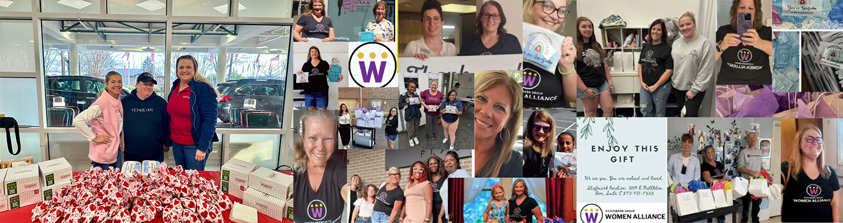
Joan Trivella doesn’t wait for permission to act. As Business Development Manager at Staffmark Group and a driving force behind its Women Alliance Business Resource Group, she operates by a simple principle: find a need, fill it, and bring others along.
That philosophy gave rise to the Purse Project. The idea: collect gently used handbags and fill them with essentials – a toothbrush, shampoo, deodorant, a pack of chewing gum. And always, tucked inside: a Staffmark Group business card. “Here you are, you’ve fled an abusive situation, and you find yourself with nothing,” Joan says. “At least they get this purse filled with useful items – and something that says someone out there cares.”
The impact was immediate. Women at shelters who received the bags began reaching out to Staffmark Group, asking for help finding work. A toiletry bag became a moment of connection. A business card became a door to a new start.
Boots on the ground
But the impact didn’t stop with the women receiving the bags. The Purse Project also transformed the women delivering them. Some BRG members were hesitant at first, unsure how to make that first call or walk into a shelter. As their confidence grew, so did their efforts and their appetite for more.
“Every event, every activity, every piece of outreach is about giving to gain,” Joan says. “And it’s not just the receiver who gains. It’s the giver.”
A safe space that strengthens the business
Beyond community outreach, the Women Alliance BRG serves a quieter but equally important function. Members meet monthly – virtually, given the organization’s national reach – and every meeting opens the same way: with an open mic for whatever is on people’s minds. This might be elderly care or childcare. This creates pressure to always appear strong. The members raise topics that are rarely on a formal agenda but nevertheless weigh heavily on professional women.
“Women try so hard to be strong all of the time,” Joan says. “It’s gratifying to know people feel they’re in a safe place, and that others can help them navigate what life deals them.”
For Joan, that openness is not separate from the business – it is the business. “Our goal is to be the heart between people and jobs,” she says. “That starts inside, with our own people. If we can’t create that space for each other, how can we create it for the communities we serve?”

Koji Sakamoto is not the obvious face of International Women’s Day, and he is the first to say so. “My wife took care of the kids and the house,” he admits with a laugh. “So, I am hardly a role model.” Yet, under his leadership, Staff Service Group has nearly doubled its share of female managers, from below 20% to 35% and rising. His approach is less about grand ambition and more about quietly changing the rules of the game.
According to Koji, the problem was structural. Women make up 56% of Staff Service Group’s workforce, but management remained predominantly male. Not because women lacked ability, but because they rarely put themselves forward. In Japan, cultural expectations around family and career weigh heavily, and many women simply do not raise their hands for leadership roles. Koji decided to stop waiting for them to do so.
Capability over confidence
“I don’t expect women to come forward by themselves,” he explains. “So instead, I tell managers: select people based on capability. If a woman doesn’t say she wants to be a manager, but she has what it takes, give her the opportunity to lead first.”
That shift has proven to be Staff Service Group’s most effective lever: appointing women to informal leadership roles as a steppingstone, bypassing the confidence gap without asking anyone to be someone they are not.
Having worked across the USA, the Netherlands and beyond, Koji has observed a consistent pattern: in people-centered industries, women bring something distinct. “When you ask a man to describe a colleague, you often get titles and credentials. When you ask a woman, you get context: how people reacted, how others felt.” Understanding people – truly understanding them – is the core of the staffing business. For Koji, the conclusion is obvious: women are simply better at it.
Starting with the men
Koji applies the same logic by targeting the men in his organization. Paternity leave at Staff Service Group was once virtually non-existent. It now stands at 40%, driven by one deceptively simple change.
“When I hear that a male employee is expecting a baby, I never ask whether he will take parental leave. I ask when and how long.” Every manager has been instructed to do the same. The framing signals that leave is expected, not exceptional. And that gradually shifts the culture.
“Time with your children is limited,” he says. “They grow so fast. I just try to give people more of tis scarce time.” For Koji, that is what Give To Gain looks like in practice: offering people – men and women alike – the space to be whole. And watching the organization grow stronger for it.
More news & insights
-
RGF Staffing joins United Nations Global Compact
NewsFeb 23, 2026
-
How RGF Staffing’s enterprise solutions model redefines cross-border HR
StoryFeb 16, 2026
-
Sustainability Progress Report: how transparency drives us toward our ambition
NewsNov 25, 2025